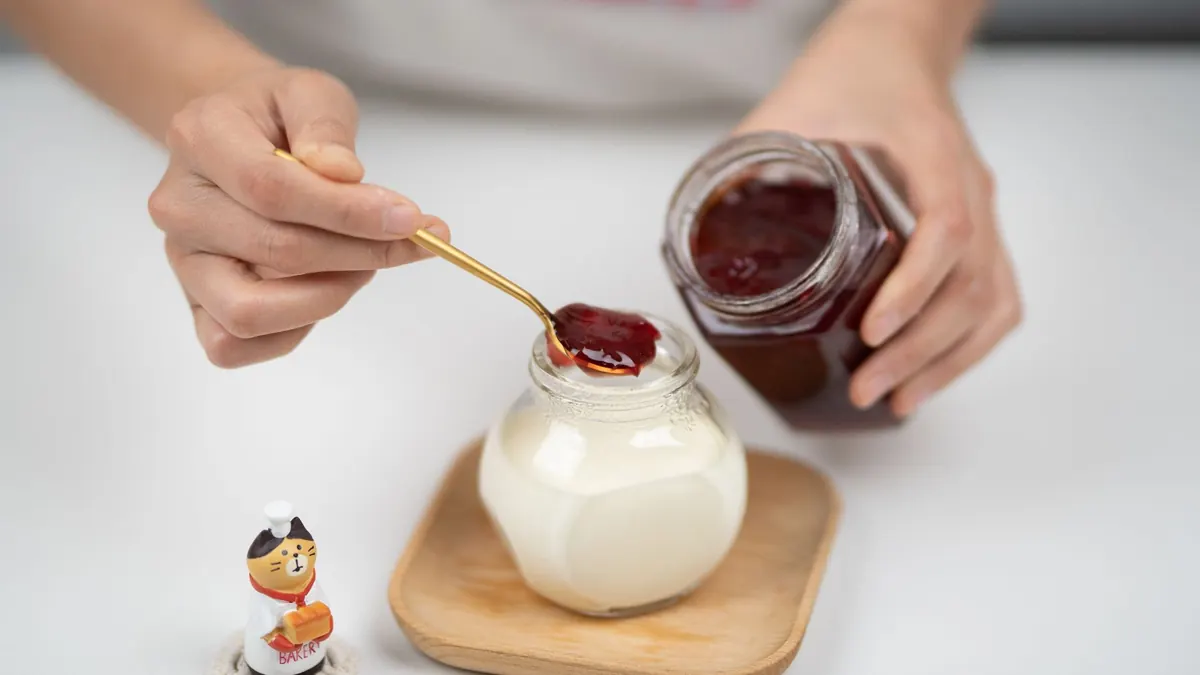
Nine jars of strawberry jam are cooling on the counter, and you have already tilted one to watch the contents slide. Before you resign yourself to a winter of very good ice cream topping, take a breath. Setting point is one of the few things in preserving that you can check in real time, and a runny batch is almost always fixable. Here is how to tell whether your jam has set, why some batches refuse, and what to do about it while the fruit is still worth saving.
What "Set" Actually Means
Jam sets when three things meet in the right proportions: pectin, acid and sugar. Pectin, a natural gelling agent found in fruit cell walls, needs acid to firm up and sugar to hold water so the gel can form. Heat does the rest, driving off water until the mixture becomes concentrated enough to gel as it cools.
That is why a thermometer helps. At sea level, water boils at 100°C (212°F), and most jams reach setting point around 104–105°C (219–221°F). If you live at altitude, subtract roughly 1°C for every 300 metres above sea level (about 2°F per 1,000 feet) from that target, because water boils at a lower temperature where you are. A thermometer tells you when you are close. The plate test tells you when you have arrived.
The Wrinkle Test, Step by Step
This is the oldest and most reliable test in home preserving, and it costs nothing.
- Put two or three small plates in the freezer before you start cooking. Cold plates speed up the cooling that the jam will do in the jar.
- When the jam looks thick and the bubbles have become slower and glossier, drop a teaspoon of it onto a frozen plate.
- Wait 30 seconds, then push the edge of the puddle with your fingertip or a spoon.
- If the surface wrinkles and the jam holds a soft skin, you are done. If it slides freely and stays liquid, keep boiling and test again in five minutes.
Resist the urge to test every two minutes. Each spoonful removed is jam you are not jarring, and constant stirring slows the evaporation you need.
Seven Signs Your Jam Has Set
- The wrinkle. The cooled sample forms a skin that crinkles when pushed.
- The thermometer. The batch has held 104–105°C for a minute or two, adjusted for your altitude.
- The sheet. Jam dropped from a spoon falls in two drops that merge and drop together, rather than in a thin stream.
- The mound. A spoonful sits up on the spoon instead of running straight off the edge.
- The slow bubble. Bubbles across the surface have grown larger, slower and glassier, and the foam has thinned.
- The pull. A wooden spoon drawn through the pan leaves a channel that closes sluggishly, not instantly.
- The 48-hour verdict. After a full day or two, a cooled jar holds a soft gel that keeps a spoon's track, even if it wobbles.
If It Hasn't Set, Wait First
Jam firms up considerably as it cools, and some fruit—figs, quince, high-pectin plums—carries on thickening for a day or two after potting. Give a doubtful batch 24 to 48 hours before you decide anything. A jar that looks loose and syrupy while warm may turn out perfectly spoonable by the weekend.
Why Some Batches Stay Runny
Most failures trace back to one of a handful of causes:
- Fruit past its best. Pectin levels fall as fruit ripens, so a batch made from soft, overripe fruit may need added pectin.
- Not enough acid. Strawberries, cherries, pears and peaches are low in acid. A squeeze of lemon juice is often the whole difference.
- Wrong sugar ratio. Cutting sugar drastically in a traditional recipe reduces the gel's structure and its keeping quality.
- A double batch. Wide pans with too much volume evaporate slowly, and the mixture stews instead of setting.
- Old pectin. Liquid and powdered pectins lose strength over time. Check the date.
- Too much stirring. Constant agitation interrupts the gel as it forms.
How to Rescue a Runny Batch
Work in small amounts and clean jars, and be prepared to accept a good sauce rather than a mediocre jam.
- Assess honestly. Syrupy and pourable is worth reboiling. Thin and juice-like is better re-labelled as a dessert sauce.
- Reheat in batches of no more than about four cups. Empty the jars back into a wide pan and bring to a rolling boil.
- Add acid first. One to two tablespoons of lemon juice per batch often tightens a set on its own if the flavour was flat or cloying.
- If it still resists, add pectin. Follow the pectin maker's instructions for the quantity and whether extra sugar is needed, since powdered pectin generally requires some sugar to work.
- Re-test on a cold plate after a couple of minutes of hard boiling, then pot into hot, clean jars.
- Store sensibly. Re-boiled jam is best used within a few months. If you made a low-sugar batch, or added pectin to one, keep it in the fridge and use it within a few weeks.
Sugar and acid are what make jam shelf-stable at room temperature, so if you have cut either sharply, treat the result as a fresh product rather than a pantry one. For processing times and safe canning practice, follow a reputable preserving guide rather than guesswork.
When to Call It Sauce Instead
A runny batch is not a failure; it is a different product. Warm it and spoon it over yoghurt, ripple it through vanilla ice cream, brush it over roast pork or chicken, or thin it with a little vinegar for a quick dressing. Some of the best things in a preserving kitchen started as a jar that would not behave.
Keep a note of what you cooked—fruit weight, sugar, the temperature you reached and how the plate test behaved. Next season, that single line in a notebook will tell you more than any recipe. And if the jam sets on the first try, enjoy it. Then write that down too.
Photo: Cats Coming / Pexels