Matcha and sencha both come from Camellia sinensis, both are grown and finished in Japan, and both land in your cup the same shade of green. They behave nothing alike in the kitchen. One is a powder you whisk into water and drink whole; the other is a leaf you steep and discard. Taste, caffeine, equipment, and the moment each one suits all follow from that difference.
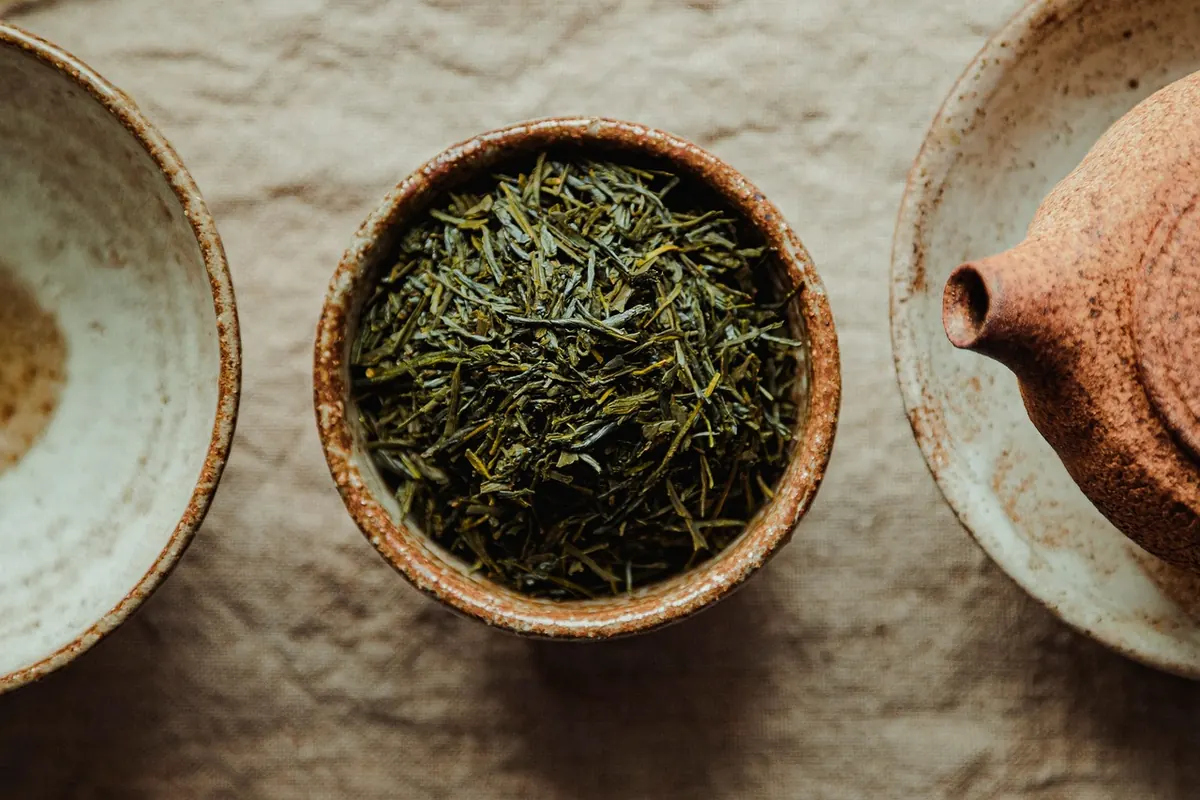
Sencha is Japan's everyday green tea. Leaves are steamed within hours of picking to stop oxidation, then rolled and dried into thin needles. The bushes grow in full sun, which builds the tannins behind sencha's brisk edge.
Matcha takes a detour. Roughly three weeks before harvest, growers shade the bushes to cut the light. The leaves respond with more chlorophyll and more amino acids, which is why the finished tea tastes sweeter and far less astringent. Those shaded leaves — called tencha at this stage — are steamed, dried, stripped of stems and veins, then ground on stone mills into a powder fine enough to stay suspended in water.
Steep sencha and only the water-soluble part of the leaf reaches your cup; the spent leaves go in the bin. With matcha, the entire leaf goes into the bowl. That single fact explains most of what follows. A gram of matcha puts a gram of leaf into your body; a gram of sencha surrenders maybe a third of itself to the water before the rest is thrown away.
Sencha drinks bright and brisk. Expect cut grass, citrus peel, sometimes a faint marine note, with sweetness underneath. First-flush sencha (shincha) is more delicate and fleeting; later harvests are more astringent. Fukamushi, the deep-steamed style, brews cloudier and softer, with noticeably less bite.
Matcha is rounder and thicker. Sweet pea, umami, a whisper of cocoa in good grades — and a bitterness that lingers when the powder is cheap or the water too hot. Texture is the real dividing line: matcha has body because there are actual particles in it.
Sencha is a clear broth; matcha is a purée. Same ingredient, entirely different delivery.
If your only reference point is a supermarket green tea bag, sencha is the nearer cousin — just cleaner, sweeter, and far less dusty. Matcha is the bigger jump, and the one more likely to divide a room: people tend to love the first bowl or quietly decide it tastes like a lawn.
Both teas contain caffeine. Matcha usually delivers more per serving because nothing is strained away — a bowl of usucha often feels closer to a small coffee than to a cup of tea. Steeped sencha sits lower, nearer a mild green tea. Exact amounts swing widely with grade, dose, water temperature, and steep time, so treat any figure you see as a rough guide rather than a promise.
Shading also raises L-theanine, an amino acid many drinkers credit for matcha's calmer, more gradual lift compared with coffee. If you are pregnant, breastfeeding, on medication, or simply sensitive to caffeine, speak to a doctor before making either tea a daily habit.
Traditional koicha, or "thick tea," uses roughly double the powder and half the water, kneaded slowly into a paste rather than whisked to a foam. It is intense, sweet and bitter at once, and it is not the place to start.
Both teas work cold, and both change character when they get there. For cold-brew sencha, drop about 10 g of leaf into a litre of cold water, refrigerate for four to eight hours, then strain — the result is rounder and sweeter, with almost none of the astringency that hot water brings out. Iced matcha is faster: whisk a scoop with 60 ml of cool water, pour it over ice, and top with cold water or milk. Shake it in a jar with a lid if you do not own a whisk.
Sencha is the low-friction option. A kettle, a mug, and a strainer will do; a small teapot makes it easier to pour off every last drop. Matcha asks for more kit and more care, though none of it is expensive in absolute terms.
Per gram, matcha costs far more than sencha, because the leaf has been deconstructed for you and because shaded growing is slower and lower-yielding. Grade matters enormously here: ceremonial matcha is meant to be drunk with water, while culinary matcha is bitter and better folded into lattes, smoothies, and baked goods.
Green tea is perishable, and both of these are more fragile than the tea bags in the back of your cupboard. Light, heat, air, and moisture are the enemies. Sencha keeps well for a few months in an airtight tin, away from the stove, and loses its edge gradually. Matcha is far less forgiving because of its enormous surface area — once opened, it fades in weeks, turning dull and flat before it ever looks different.
Buy small and often. For matcha, keep the tin sealed in the fridge or freezer and let it come to room temperature before opening, so condensation does not form inside. For sencha, buy what you will drink this season and let shincha be a spring treat rather than a year-round habit.
Start with sencha if you want an easy daily habit. Start with matcha if you want the ritual, the texture, and the caffeine in one bowl. Plenty of drinkers end up keeping both on the shelf — the leaf for the long afternoon, the powder for the mornings that need a firmer push.
Photo: mirkostoedter / Pixabay